Why PP Plastic Formwork is the Best Choice for Drainage Ditches & Water Canals
Stop using timber that rots in the mud. Learn how Ecoformwork's waterproof PP formwork speeds up drainage ditch and canal construction in tropical and arid climates.
Why PP Plastic Formwork is the Best Choice for Drainage Ditches & Water Canals
Introduction
Drainage ditches, irrigation canals, and retaining walls are long, repetitive projects. They are the backbone of infrastructure in Southeast Asia, the Middle East, and Africa.
Historically, contractors use timber (plywood) because it's easy to cut and shape. However, in wet, muddy conditions, wood absorbs water, swells, and gets destroyed after just 3 to 5 uses. You end up spending more on labor to repair uneven concrete and constantly buy new wood.
To make a profit on long water infrastructure projects, you need a formwork system that is waterproof, fast to assemble, and can handle curves and slopes.
1. The Killing Factors of Timber Formwork in Water Projects
Water and wood do not mix. When timber is used for drainage ditches, the edges swell. This leads to:
Poor Concrete Finish: The swollen wood creates uneven wall surfaces, requiring costly plastering and repair.
Material Wastage: Muddy environments destroy plywood quickly. You lose money on both materials and disposal.
Delayed Schedules: Replacing broken timber slows down the daily pouring cycle.
2. How Ecoformwork Cuts Costs for Long Water Projects
Our Ecoformwork system is made from Polypropylene (PP) with long fiber reinforcement, specifically designed for heavy civil engineering:
100% Waterproof & Rot-proof: The panels never absorb water. Whether it’s raining in the tropics or blazing hot in the Middle East, panels stay flat and stable. There is no rust, no rot, and no swelling.
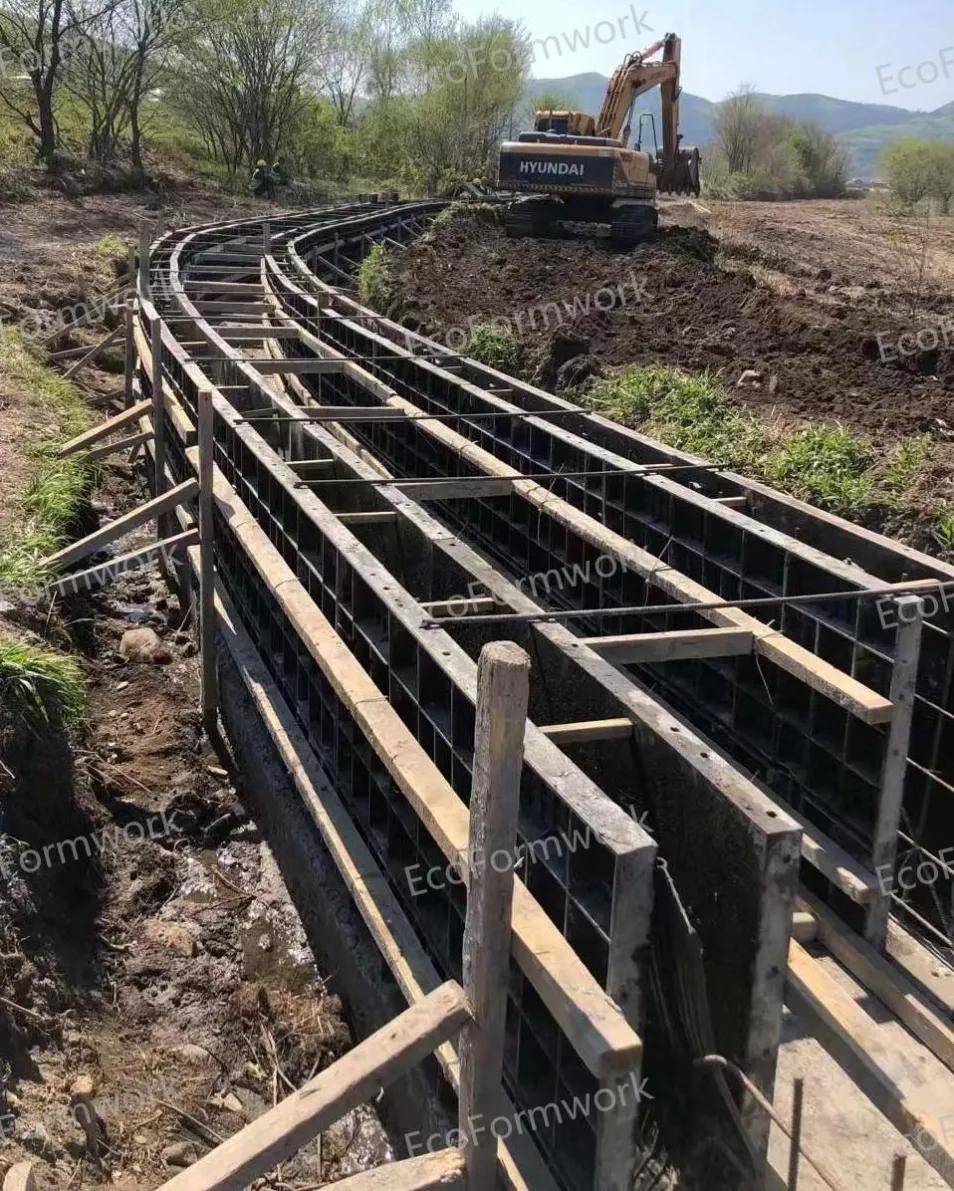
Flexible Assembly for Curves and Slopes: Drainage ditches are rarely perfectly straight. Our panels come in multiple sizes (from 400x1200mm to 1000x1500mm). You can easily adjust the panel layout and reinforcement density to match the slope of the ditch or form curved sections, making it highly adaptable for retaining walls and canal linings.
Up to 200 Reuse Cycles: Even if you only use it 20 times on a 10-kilometer canal, you can clean it and transfer it to your next project. The cost per square meter is drastically lower than wood.
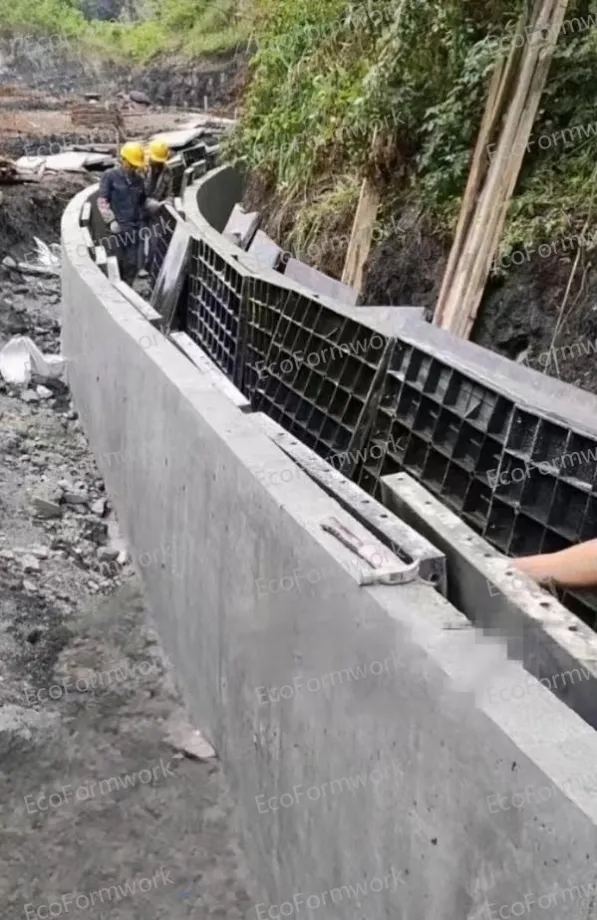
Smooth Concrete Finish: Excellent demolding effect means no plastering is needed. This is perfect for water flow efficiency and reduces your finishing labor costs.
3. Real Project Case: Drainage Ditch & Retaining Wall
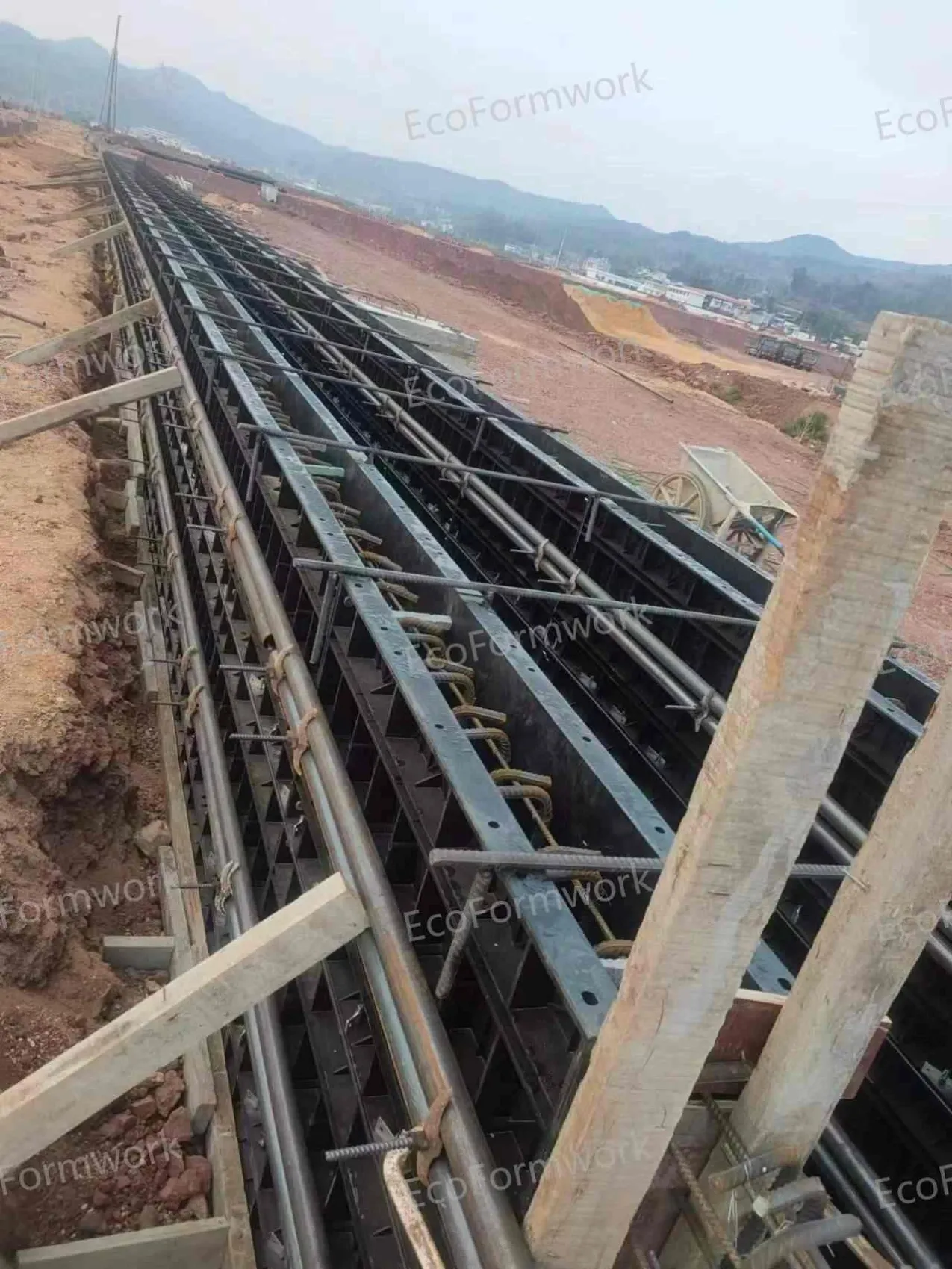
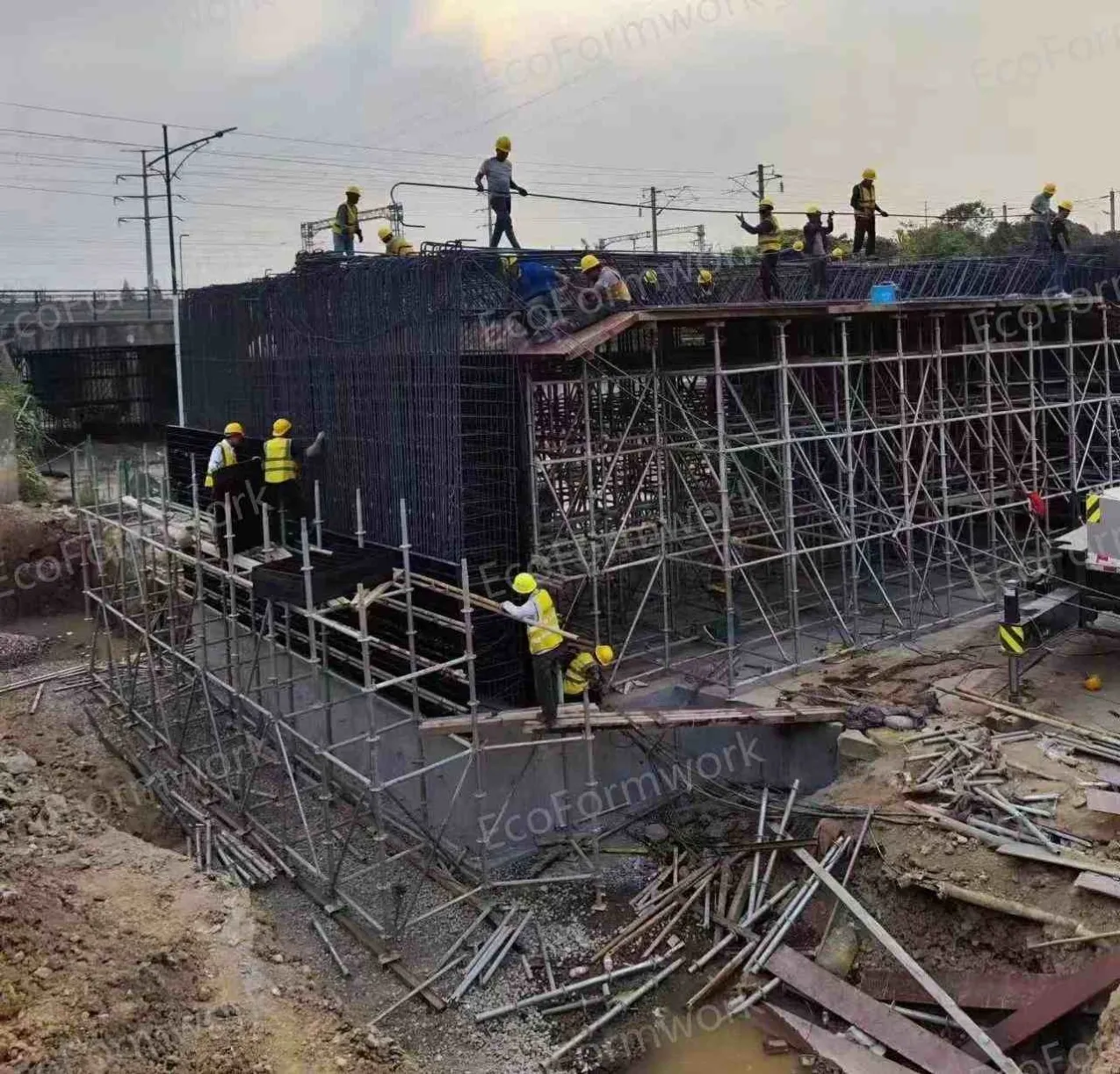
Here is how a contractor used our system on a drainage ditch project:
Project Type: Long trench drainage ditch and retaining wall.
The Challenge: Muddy site conditions destroying timber, slow manual handling.
The Result: Ecoformwork completely replaced timber. Workers easily moved the lightweight panels along the 100-meter long trench. The pin-and-plate connection allowed fast assembly without any nails. After pouring, the demolding was flawless, and the panels were cleaned with water and reused immediately.
4. Eco-Friendly and Cost-Effective
Unlike wood, which ends up in landfills, Ecoformwork is 100% recyclable. By reducing material waste and labor costs, it helps contractors win bids on international infrastructure projects where sustainability and price are key factors.
Conclusion & CTA
Don't let rotting timber ruin your water project margins. Upgrade to a system built for the water.
Calculate Your Savings: Contact us to get a free cost-comparison sheet (Ecoformwork vs. Timber) for your water canal project. Send us your drawings, and we will provide a free panel layout plan.
👉 Contact us via WhatsApp:https://wa.me/8613437133507
Read next
More from the journal
Keep readers moving through related announcements, stories, and field notes.
How Ecoformwork (PP long-fiber formwork) helps contractors build culverts and utility tunnels faster in confined spaces without heavy lifting equipment.
Discover how lightweight plastic formwork systems help contractors reduce labor costs, improve installation speed and increase construction efficiency.